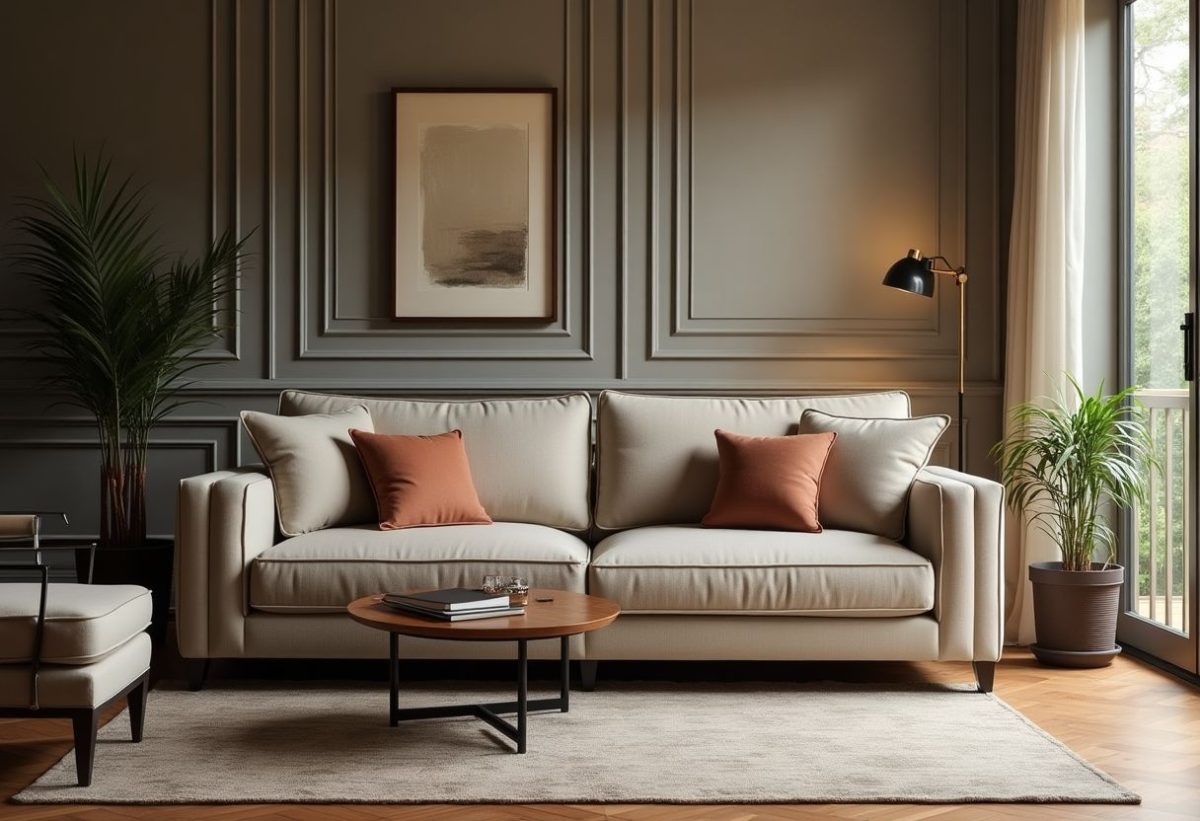
When thinking of home comfort and the art of living, one piece of furniture stands out for its presence and utility in our homes: the sofa. This centerpiece of our living rooms, a symbol of hospitality and conviviality, has evolved over the centuries, adapting to the styles, needs, and innovations of different eras.
The origins and evolution of the sofa
The sofa, as we know it today, has its roots in Antiquity. Its history is a fascinating journey through time and cultures.
- Antiquity: The first upholstered seats appeared in ancient Egypt, used by the elites of society.
- In Roman times, the triclinium emerged, a piece of furniture designed for banquets where people reclined to eat.
- During the Middle Ages, seating became more austere, but it was during the Renaissance that comfort returned to the forefront of concerns.
- In the 18th century, the sofa truly took shape with the invention of the sofa and the divan, influenced by Rococo and Baroque styles.
- The 19th century saw the Victorian era bring more elegant and upholstered designs, popular among the bourgeoisie.
- The 20th century witnessed an explosion of modern and functional styles, with the arrival of materials such as leather and synthetic fabrics.
Different types of sofas for various needs
Every home is unique, and the choice of a sofa often goes beyond mere aesthetic criteria. Depending on needs, preferences, and available space, different options are available to us.
Classic sofas, with their clean lines and plush cushions, integrate harmoniously into any interior. Corner sofas, on the other hand, are perfect for optimizing space, allowing everyone to find their place during family or friend gatherings. For fans of modularity, the modular sofa is the ideal solution, adjusting to the changing configurations of rooms.
Finally, the sofa bed combines practicality and design, offering additional sleeping space without compromising style. These various possibilities illustrate the ability of the sofa to reinvent itself and adapt to everyone’s expectations.
Materials and fabrics: a matter of taste and practicality
The choice of materials and fabrics for a sofa is essential, as it determines not only comfort but also the durability and aesthetics of the piece.
- Leather: Synonymous with luxury and elegance, it is also appreciated for its longevity and ease of maintenance.
- Synthetic fabrics: Very popular, they offer a wide variety of textures and colors while being resistant to stains and wear.
- Natural fabrics: Such as linen or cotton, they appeal with their authentic look and comfort, although they require more careful maintenance.
- Velvet: With its soft touch and sophisticated appearance, it adds a touch of charm to any living room.
The sofa in culture and art
Beyond its functional role, the sofa holds an important place in culture and art, often symbolizing much more than just a piece of furniture.
In literature, it is the silent witness to intimate conversations and deep reflections.
In cinema, the sofa sometimes becomes a character in its own right, whether in romantic comedies where it is the place for reunions, or in dramas where it embodies solitude.
The world of television series is no exception, with sitcoms like Friends or How I Met Your Mother where the sofa transforms into a central space of the plot, welcoming the laughter and tears of the protagonists.
Thus, the sofa continues to captivate the collective imagination, reflecting our need for intimacy and social connection.