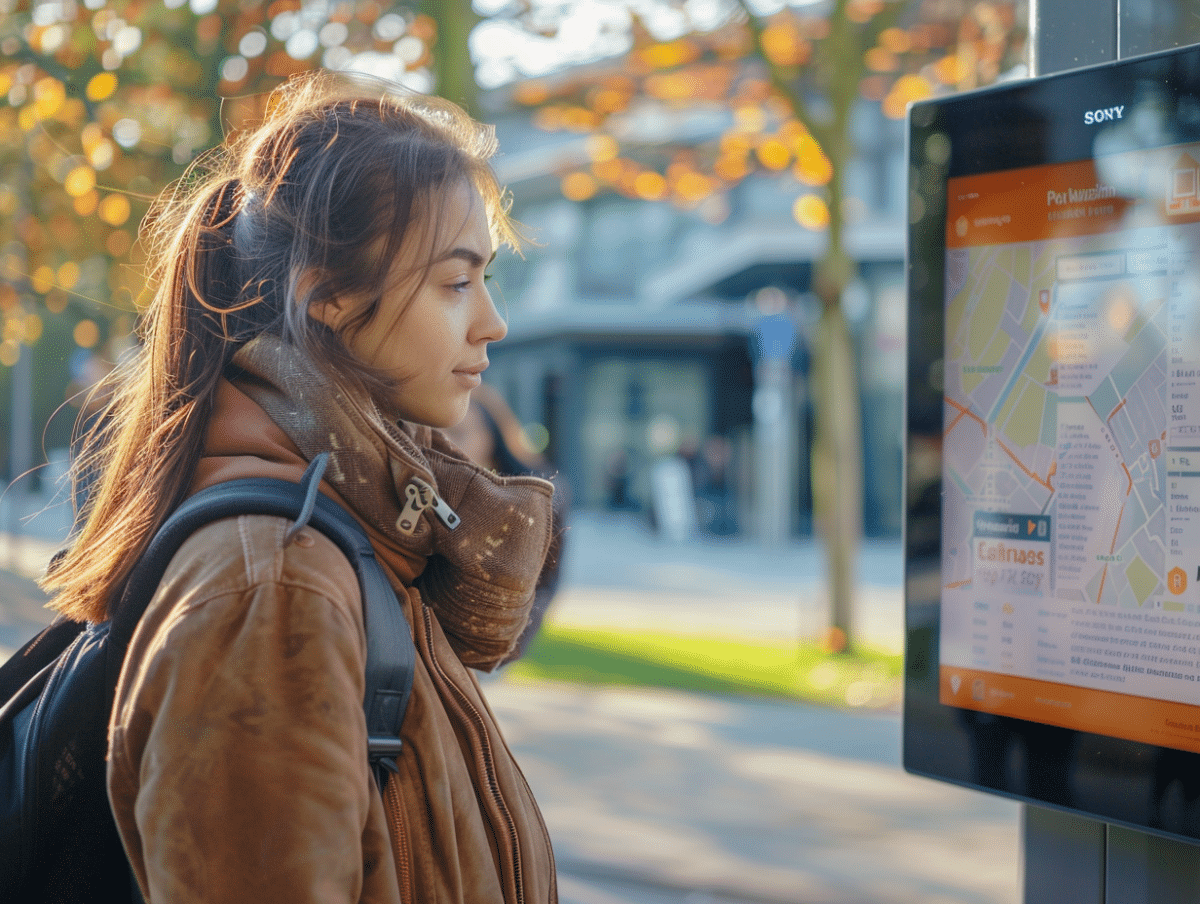
Navigating the vastness of a university campus can quickly become a challenge for new students and visitors. Fortunately, with the digital age in full swing, innovative solutions are emerging to facilitate this quest for orientation. From detailed mobile applications to interactive information panels, and augmented reality, every university is now implementing strategies to help locate lecture halls, libraries, or administrative services. These technological initiatives, coupled with practical tips, transform the campus experience, making it less intimidating and more welcoming for everyone.
Practical Strategies for Navigating a University Campus
Finding your way on a university campus requires a methodical approach and knowledge of the available services. At Université de Caen Normandie (UNICAEN), the Orientation and Insertion Space serves as a central point for students seeking guidance. Here, the support is holistic, encompassing academic, professional, and personal dimensions, especially for students facing a disability. These spaces are not just simple counters; they are the pulsating heart of student support, where orientation and professional integration unfold with meticulous attention.
At Université Toulouse Capitole, better known by the acronym UT Capitole, navigating the university grounds is complemented by a wealth of activities offered to students. The DAPS, or the service dedicated to physical and sports activities, as well as the Cultural Space, form tangible landmarks, rallying places for sports, cultural, associative, and civic initiatives. These services, enhanced by entities like Alcuin Purpan, increase the visibility of points of interest on campus, thus facilitating student orientation within a vibrant and dynamic space.
Knowledge of available services and participation in activities offered by the university are effective levers for acclimating to the campus environment. Université de Caen Normandie organizes training and dedicated services, while Université Toulouse Capitole offers a range of services and activities to enrich student life. These practical arrangements, combined with clear signage and the judicious use of digital resources, transform the complexity of a campus into an accessible and welcoming learning and living space.

Technologies and Innovations for Better Campus Accessibility
Technology, an essential ally of accessibility, opens new horizons for students facing physical or sensory obstacles. The law for equal rights and opportunities, enacted on February 11, 2005, echoes this by emphasizing the need to promote access to education for people with disabilities. This legislative will is now concretely applied through innovative tools like the Evelity app, a kind of indoor GPS specifically designed for the needs of disabled students. The IFMKDV (Institute of Training in Masso-Kinesitherapy for the Visually Impaired), for example, has integrated Evelity at the heart of its accessibility strategy, significantly improving the autonomy of its users.
In this quest for innovative and inclusive spaces, the platform ‘Inspiring Places in Higher Education’ launched on October 4, 2022, lists 225 spaces across 45 institutions. This project, led by figures such as Florence Kohler, Yann Caradec, and Claire Josserand, and supported by partner associations like Learning Lab Network and ADBU, allows institutions to draw inspiration from best practices to design campuses that include all students, regardless of their physical condition.
‘The Kube’, a space at TBS school, embodies the idea of a learning and exchange place adapted to the new needs of students. It is part of those innovative places that redefine the campus experience, combining flexibility, technology, and design tailored for everyone. These spaces are not only aesthetic; they are functional and designed to promote integration and success for each individual.
Higher education institutions, by adopting these innovative solutions, do not merely comply with a legal requirement; they actively participate in a social transformation, where accessibility and inclusion become vectors of progress and equal opportunities. These initiatives reflect a commitment to adapting to contemporary realities, where higher education asserts itself as a universal right, accessible and tailored for all.