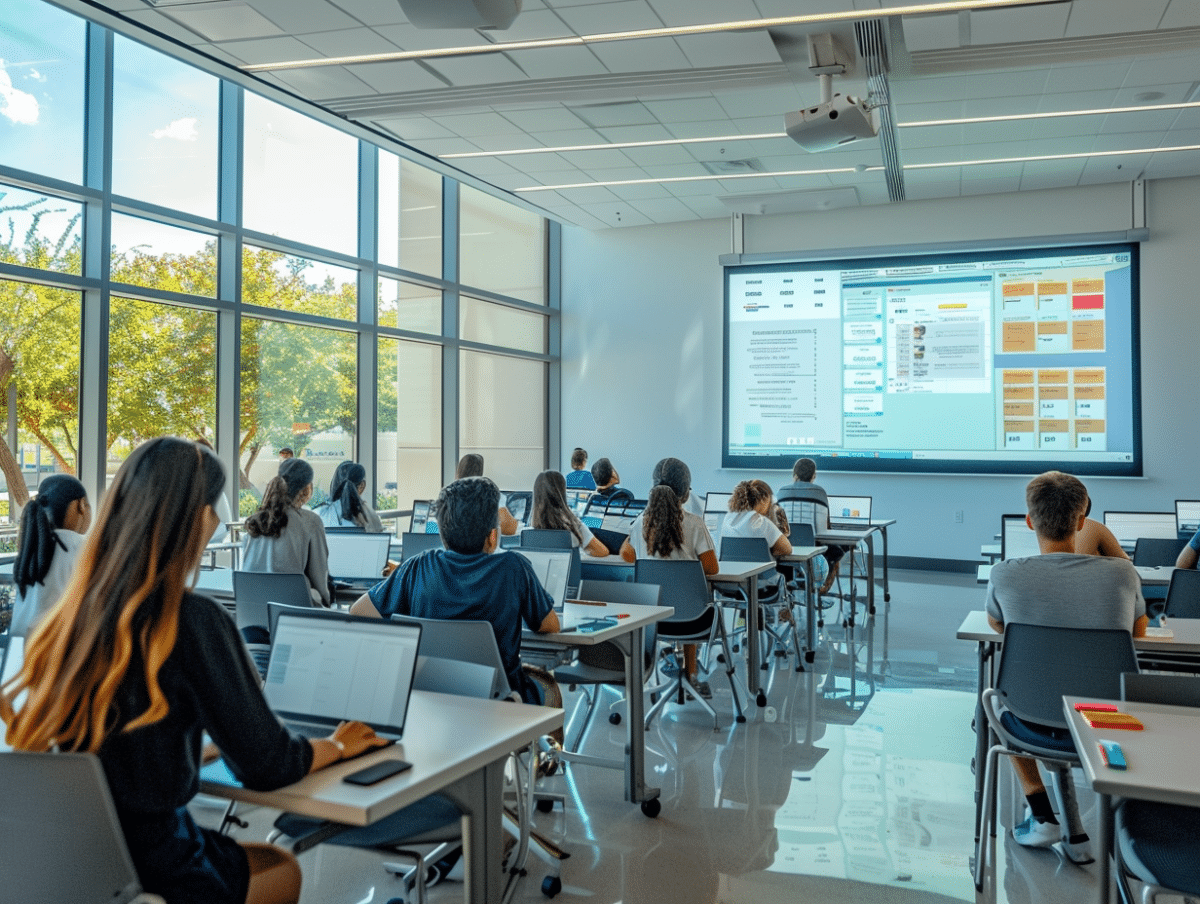
Educational institutions are seeing their administrative practices evolve thanks to technological advancements. School management software allows for the centralization of student information, thereby facilitating the tracking of absences, grades, and behaviors.
Teachers and administrative staff benefit from collaborative tools that optimize lesson planning and communication with parents. Online platforms provide increased accessibility to educational resources, making educational processes smoother. Digitalization alleviates administrative tasks and improves the efficiency of educational institutions.
Technological Innovations in School Administrative Management
Technological advancements are transforming the daily operations of schools. School management systems are becoming valuable allies in automating administrative tasks. MyCampus EduServices illustrates this transition by offering comprehensive solutions for managing student absences, grades, and behaviors. These systems centralize information, thus simplifying administrative and educational processes.
Digital Tools in Service of Education
Teachers now have digital tools that facilitate their work. Digital workspaces (ENT) such as Éduthèque and educational resource banks (BRNE) provide direct access to a variety of educational resources. These platforms are designed to support teaching and encourage interactive learning. With the integration of artificial intelligence, school management systems can personalize students’ educational paths, addressing each individual’s specific needs.
- Éduthèque: provides educational resources to teachers
- BRNE: offers educational digital resources
- Pix: assesses and certifies students’ digital skills
Training and Pedagogical Hybridization
Videoconferencing and distance learning are redefining training in the school environment. Initiated by the European Union, the European Education Area project aims to provide high-speed internet to all schools by 2025. Prestigious universities like Harvard offer distance courses, thus democratizing access to quality education. Platforms like M@gistère train teachers in the use of digital tools, enhancing their mastery of educational technologies.
Technology, by transforming educational systems, offers unprecedented perspectives. School leaders must now integrate these new technologies to optimize administrative management and improve the quality of teaching.

The Impacts of Technology on the Efficiency and Quality of Administrative Management
The integration of technology into school administrative management systems has revolutionized their operation. By automating repetitive tasks, school management systems free up time for administrative staff, allowing for better allocation of human resources. The efficiency of internal processes is greatly improved.
According to a Gallup study, 75% of teachers find that students learn better when they are encouraged to express creatively what they have learned. Technology, by facilitating access to innovative educational tools, actively contributes to this dynamic. The use of artificial intelligence in these systems allows for real-time data analysis, providing valuable insights to adapt educational strategies to the individual needs of students.
Optimization of Resources and Skills
Resource optimization is another major impact. Digital platforms allow for centralized management of educational and administrative resources. For example, ENT (Digital Workspaces) integrate not only communication tools but also modules for managing schedules and absences. This significantly reduces human errors and improves the transparency of school operations.
- Management Systems: automate administrative tasks
- Artificial Intelligence: analyzes data in real-time
- ENT: centralizes resources and communication
These developments benefit not only teachers and students but also school leaders and administrative staff. By reducing time-consuming tasks, technology allows for a focus on high-value activities, such as developing new pedagogical approaches and personalizing educational paths.
The digital transformation of schools is now an unavoidable reality. The implementation of advanced technological systems optimizes not only efficiency but also the quality of administrative management, paving the way for a more inclusive education that meets the challenges of the 21st century.