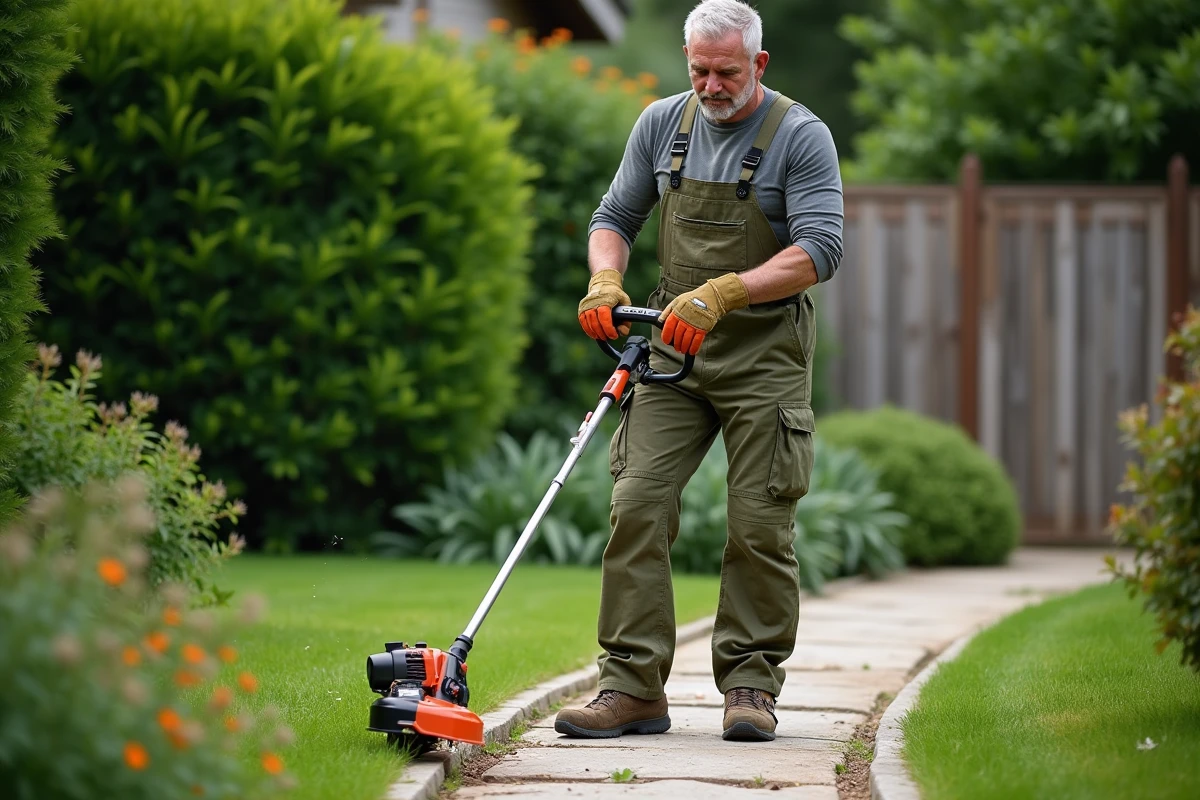
A thermal string trimmer is primarily chosen based on its engine block, not on the marketing label. The displacement, crankshaft type, and cutting system determine the lifespan and comfort of use much more than the brand printed on the casing. Here, we detail the technical criteria that distinguish a professional tool from a disguised consumer model.
Engine block and Stage V compliance: what changes in recent thermal string trimmers
The European regulation (EU) 2016/1628 has imposed strict emission thresholds on small non-road engines for several years. Current thermal string trimmers must meet Stage V requirements, which has prompted manufacturers to revise carburation, filtration systems, and catalytic converters.
In practice, a Stage V compliant model starts more easily in cold conditions, consumes less fuel mix, and produces a lower noise level compared to previous generations. The downside: the complexity of the engine block increases, and neglected maintenance (clogged air filter, un replaced spark plug) degrades performance more quickly than before.
We recommend checking for the explicit mention of Stage V in the technical specifications. A model that does not display this compliance is either old or imported outside the European circuit, with consequences for warranty and parts availability. To delve deeper into comparisons between compliant models, the detailed sheets available on coupebordurethermique.fr allow for cross-referencing displacement, noise level, and type of engine.
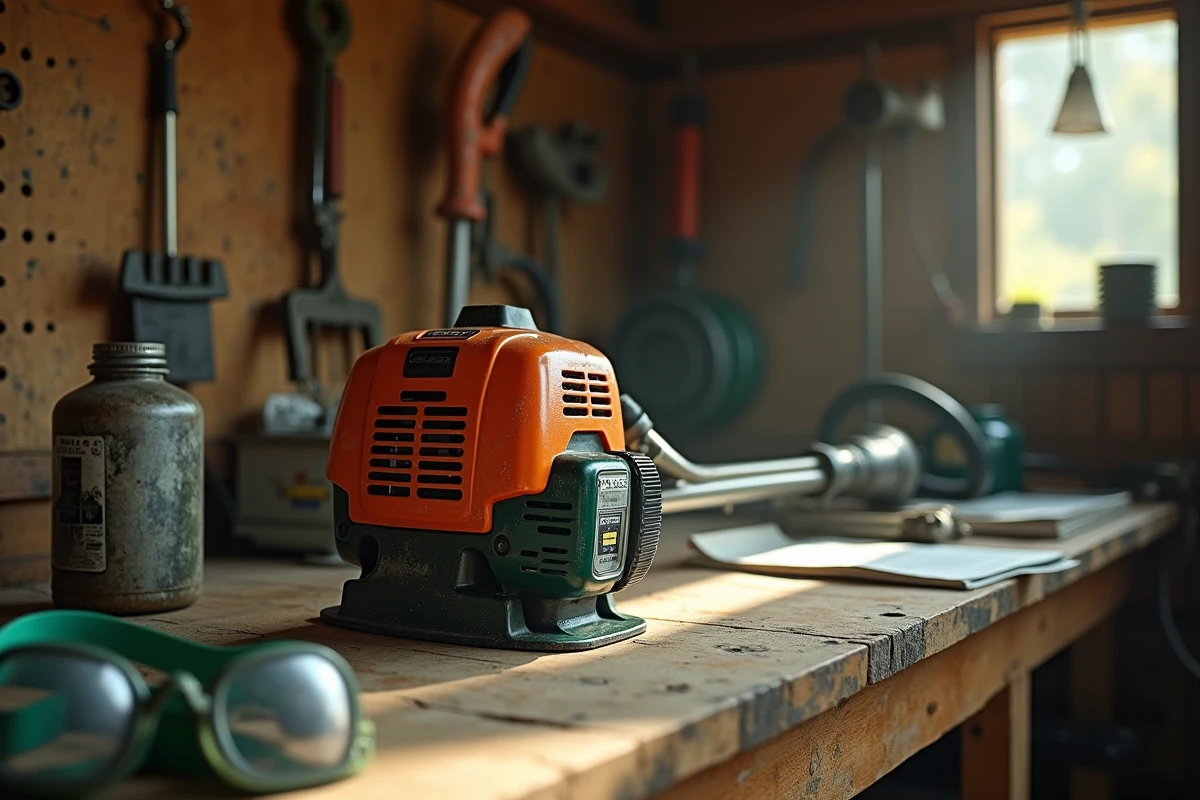
Displacement and power-to-weight ratio of the thermal engine
Displacement remains the number one discriminating criterion. A small displacement two-stroke engine is suitable for edging on well-maintained lawns. As soon as the vegetation exceeds the stage of short grass (tall grasses, woody regrowth at the base of fences), it is necessary to increase the displacement to avoid overloading the engine.
Two-stroke or four-stroke
Consumer thermal string trimmers almost all feature a two-stroke engine, which is lighter for the same displacement. The four-stroke, offered by a few manufacturers like Honda, provides more consistent torque and lower consumption, but significantly increases the weight of the machine.
For weekly use in a medium-sized garden, the two-stroke remains the rational choice. The four-stroke is justified on larger plots where the working time exceeds one hour per session, and where fatigue from vibrations becomes a limiting factor.
Vibrations and ergonomics of the tube
A good power-to-weight ratio is not enough if the anti-vibration system is basic. Stihl and Husqvarna models incorporate silent blocks between the engine and the transmission tube. On entry-level models, this decoupling is often absent or reduced to a simple rubber damper, which generates quick muscle fatigue in the forearms.
- Check for the presence of a decoupled anti-vibration system (the engine is mounted on silent blocks independent of the tube)
- Test the balance of the machine with the provided harness: the suspension point should allow for natural swaying without wrist effort
- Prefer a straight tube if you work in open terrain, a curved tube for narrow borders between flower beds
Cutting system: line, blade, or mixed head
The choice of cutting head determines the versatility of the tool. A thermal string trimmer equipped solely with a round nylon line handles soft grass well but wears out quickly on tough weeds. Square or serrated line attacks hard stems better, at the cost of a more pronounced cutting noise.
High-end models accept tri-blade heads or brushcutter discs. This compatibility transforms the string trimmer into a versatile tool capable of tackling brambles and woody regrowth. Before purchasing, ensure that the angle drive can handle the torque of a blade: a plastic drive will not hold up.
Diameter and section of the nylon line
A round section line below two millimeters limits effectiveness to fine lawns. For regular use on mixed terrain (grass, clover, plantain), we recommend a serrated line of at least two millimeters. Beyond that, the engine power must keep up; otherwise, the speed drops and the line breaks instead of cutting.
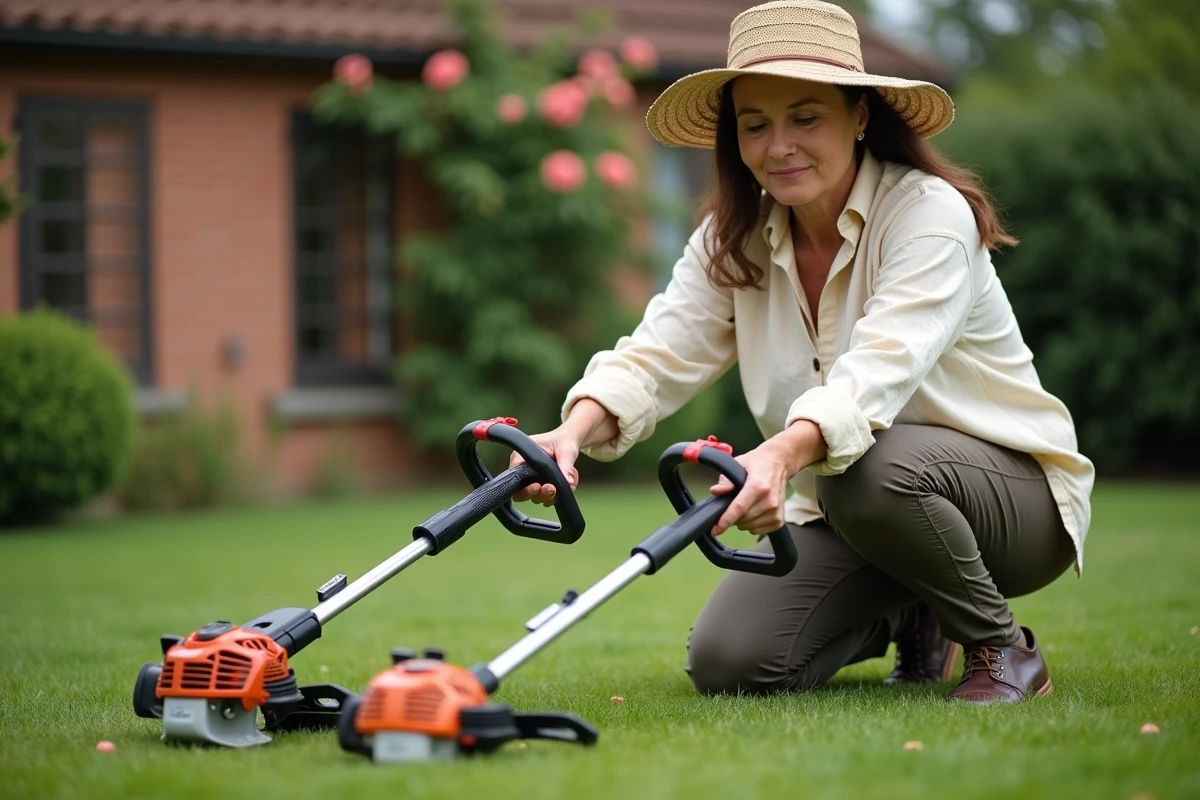
Noise, local restrictions, and operating hours of a thermal string trimmer
Since 2024, many European municipalities are tightening the allowed operating hours for thermal tools in residential areas. These restrictions do not take the form of a national ban but rather municipal orders that vary from one town to another.
The noise level of the chosen model directly determines your working window. A noisy string trimmer confines use to midday slots on weekdays, which is not compatible with amateur use on weekend mornings. Check the prefectural or municipal order of your town before investing in a powerful model.
- A Stage V compliant engine generally produces less noise pollution than an older model with equivalent displacement
- Hearing protection remains necessary for the operator, even on recent models
- In co-ownership or housing estates, check the internal regulations: some prohibit thermal tools regardless of the time
The best thermal string trimmer is not the most powerful in the catalog. It is the one whose displacement, cutting system, and noise level match your terrain, your frequency of use, and local regulatory constraints. A Stage V compliant model, equipped with a true anti-vibration decoupling and a blade-compatible head, covers the vast majority of needs without compromising on durability.