
One Saturday morning, the lawnmower refuses to start, the hose is leaking at the connection, and the drill has no battery left. We find ourselves rigging makeshift solutions instead of enjoying the house or the garden.
The choice of home and garden equipment is rarely made in a store aisle: it is made in those moments when the tool is missing or fails at the wrong time. It is better to set some concrete criteria before buying than to fill a garage with unused equipment.
Material durability and frequency of use: the real selection filter
Before looking at brands or promotions, it saves time to classify each need according to a simple grid: how often it is used and what level of mechanical stress the tool will endure. A spade used every week in clay soil is nothing like a dibber used three times a year.
For gardening tools, a handle made of hardwood (ash or beech) withstands repeated shocks better than a low-quality composite that eventually cracks. Forged heads made of boron steel retain their sharpness longer than stamped heads. Indoors, the same reasoning applies to DIY tools: a drill-driver used every month deserves a brushless motor, while a carbon model is suitable for occasional use.
You can browse the equipment of Ta Maison Ton Jardin to find categories sorted by type of use, which helps avoid over-sizing (or under-sizing) purchases.
- Intensive use (weekly or more): prioritize forged steel, brushless motors, long warranties. The initial extra cost pays off in a few seasons.
- Moderate use (monthly): mid-range is sufficient, provided you check the availability of spare parts (blades, batteries, filters).
- Occasional use (a few times a year): renting or borrowing from neighbors is often the best option, especially for large equipment like scarifiers or pressure washers.
Refurbished equipment for the home: an underestimated option
Buying guides almost always talk about new equipment. We overlook a significant trend. For several years, ADEME has reported that DIY and gardening equipment is among the categories with the fastest-growing share of second-hand items in households. The quality-price perception is generally considered satisfactory by the households surveyed.
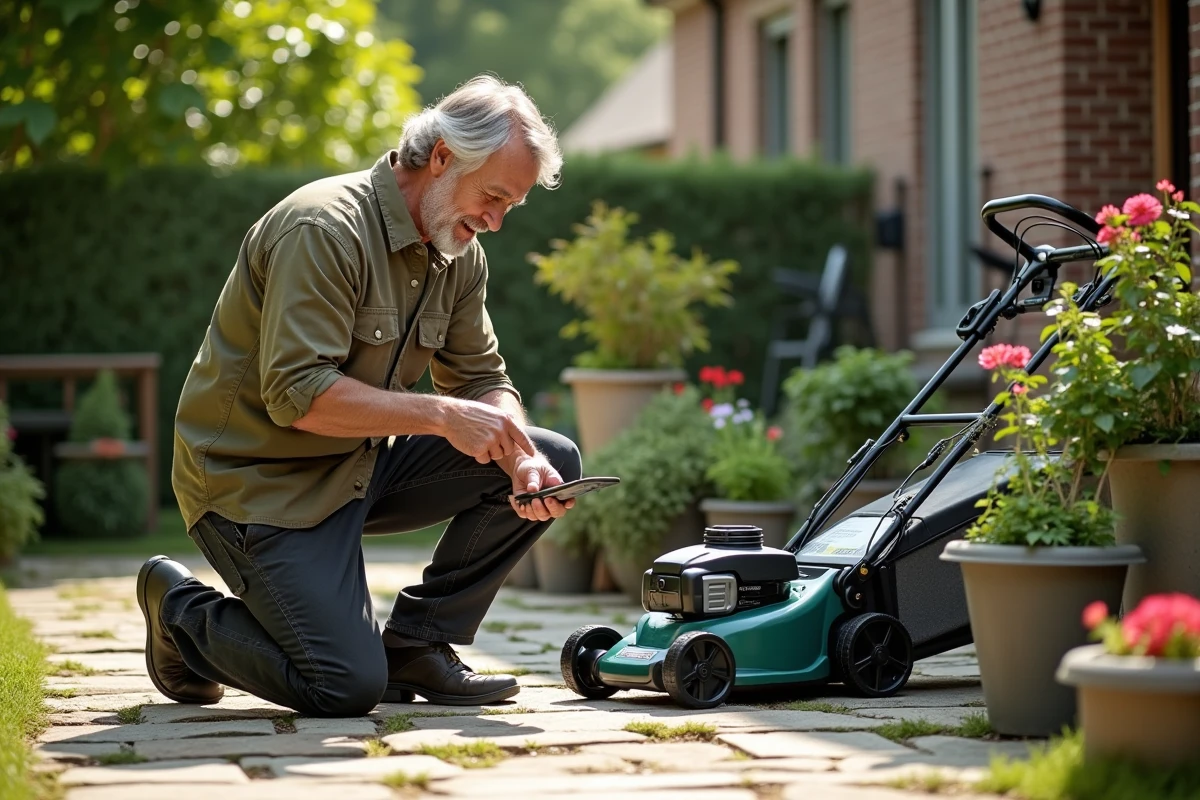
In practice, today you can find lawnmowers, hedge trimmers, and power tools in working condition on specialized platforms, in recycling centers, or at Emmaüs, sometimes with a warranty of a few months. Checking the condition of the blades, the remaining battery capacity, and the absence of play in the mechanisms is enough to avoid unpleasant surprises.
There is a limit: feedback varies on the durability of refurbished batteries, especially beyond two years. For hand tools (pruners, spades, rakes), second-hand poses much less risk, as a handle can be replaced and a blade can be sharpened.
Versatile gardening tools vs. specialized equipment
We tend to stack specialized tools when a compact kit covers most tasks. A good bypass pruner, a toothed spade, a rake, a fine rose watering can, and a garden line allow for planting, maintaining, and harvesting in most vegetable gardens and flower beds.
Multiplying specialized gardening accessories clutters more than it facilitates work. A bulb planter is useful if you plant several hundred bulbs every autumn. For a few dozen, a simple transplanting spade does the same job. The question to ask is: will this tool save me time at least ten times a year?
For the home: routine tasks and DIY tools
The same principle applies indoors. A drill-driver with a set of varied bits, a spirit level, a measuring tape, and a multifunction saw cover the essentials of small domestic DIY tasks. A circular saw or router only makes sense if you work with wood regularly.
Proper storage extends lifespan as much as the initial choice. A ventilated, dry, and organized garden shed with wall hooks prevents rust and impacts between tools. Indoors, a pegboard in the garage or laundry room serves the same purpose for DIY equipment.

Home automation and connected objects for the garden: what the regulations change
Smart irrigation, robotic lawnmowers, app-controlled lighting: the connected home extends to the garden. Before splurging on a Wi-Fi timer or a soil moisture sensor, a regulatory point deserves attention.
The REEN law (reduction of the environmental footprint of digital technology), enacted in 2021 and gradually coming into effect, requires manufacturers to better inform about energy consumption, reparability, and software support duration of connected devices. ARCEP and ADEME have published guidelines on displaying this information.
In practice, this means that we can (and should) compare connected garden objects on three criteria rarely highlighted:
- The guaranteed duration of software updates, which conditions security and operation in the medium term.
- The reparability index displayed on the packaging, when available, which informs about the ease of part replacement.
- The standby consumption, often overlooked for a device permanently plugged in outside, but which impacts the annual bill.
A connected object without guaranteed software updates beyond two years is a risk of rapid obsolescence. It is better to have a reliable mechanical irrigation timer than a connected model abandoned by its manufacturer.
Outdoor decoration and landscaping: do not confuse equipment with accessories
Pergolas, awnings, privacy screens: these elements pertain to the layout of outdoor space, not to equipment in the operational sense. They deserve a separate budget and different criteria (wind resistance, UV treatment, fixing standards). Mixing them in the same shopping basket often leads to cutting corners on the quality of one or the other.
Choosing your home and garden equipment comes down to balancing durability, frequency of use, and actual budget. A well-organized garage with five reliable tools is more useful than a shed filled with mediocre equipment. And when usage is rare, second-hand or rental remains the most rational choice.