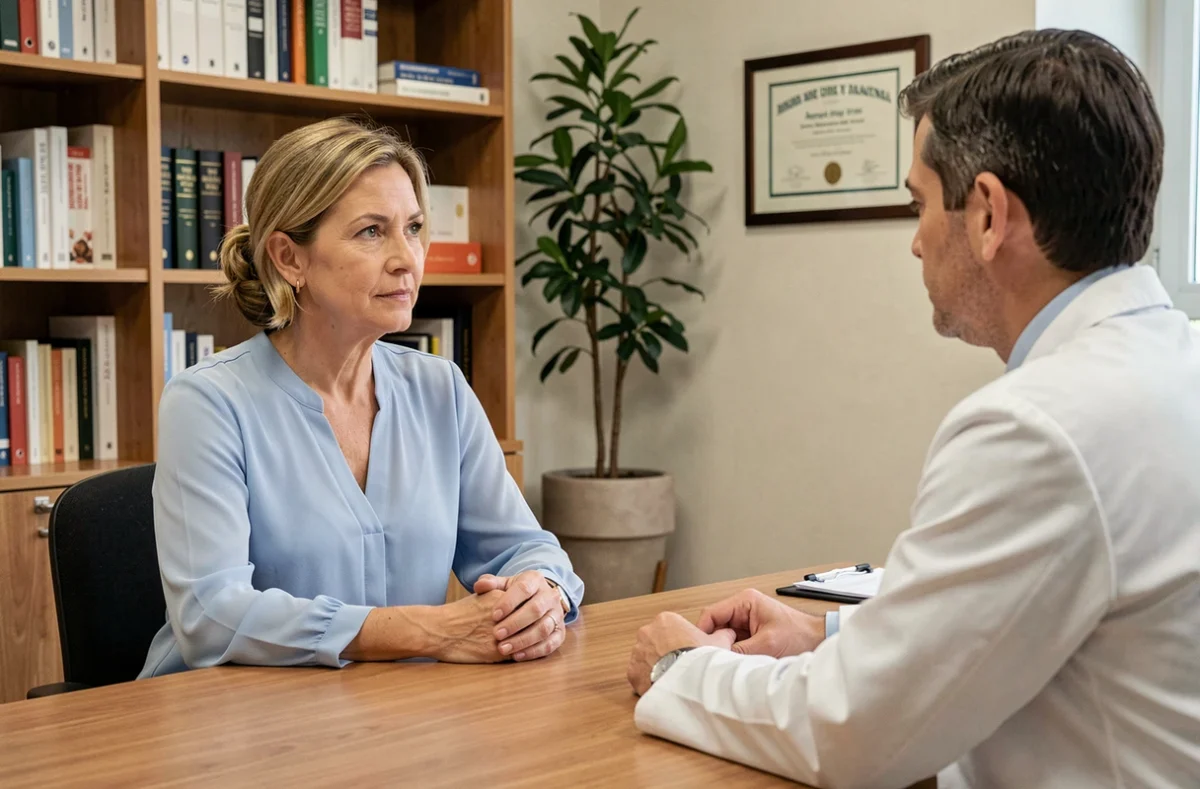
In France, a shortage of general practitioners in some areas makes it harder to get prompt medical advice. When your regular doctor is on leave, fully booked or nowhere to be found, it can be tempting to go to the hospital emergency department for a problem that is not life-threatening. The French healthcare system offers several ways to get advice depending on the severity of the situation, but many people are unfamiliar with how they work together.
Assess your healthcare needs before picking up the phone
The first question to ask is not “who should I call?” but “what do I need right now?” The healthcare system is structured around three levels of severity, each with its own appropriate channel.
- A life-threatening emergency (loss of consciousness, chest pain, bleeding, respiratory distress) requires calling 15 (SAMU) or 112 from a mobile phone. No other channel is appropriate in this situation.
- For urgent care when there is no immediate threat to life (persistent high fever, acute pain, moderate injury), call the medical triage service on 15. It can direct you to an out-of-hours medical centre or an on-call doctor, or to a service such as SOS Médecins for a home visit.
- Non-urgent requests (prescription renewals, questions about medication, preventive health advice, referral to a specialist) can be handled through teleconsultation, a health advice platform or a standard appointment with an available practitioner.
Confusing these three levels puts emergency services under strain and delays care for serious cases. It also leads patients to wait for hours with a problem that could have been resolved with a phone call.
To find out more about getting personalised health advice, you can contact the Virages Santé website to discuss your situation with a specialist.
Your regular doctor is unavailable: medical advice channels to know
If your regular doctor does not respond, several alternatives are available, but they do not all provide the same service.
Medical triage via 15
SAMU does not handle life-threatening emergencies alone. The doctor on the 15 medical triage service assesses the situation over the phone and directs you to the most appropriate care: basic medical advice, a visit from an on-call doctor, directions to an on-call pharmacy or, if necessary, an emergency response. This service is available 24 hours a day.
Medical triage is a medical act in its own right. The doctor asks specific questions about your symptoms, medical history and current treatments. They may decide that simple advice is enough, with no need for a visit or consultation.
SOS Médecins and out-of-hours medical centres
SOS Médecins provides home visits and consultations at its centres, including in the evening, at night and on weekends. Out-of-hours medical centres, often affiliated with a hospital or an intermunicipal authority, accept patients without an appointment during set hours. Both options are for urgent care, not remote advice.
Check opening hours and the area covered before setting out to avoid an unnecessary wait. Coverage varies considerably from one department to another.
Teleconsultation and advice platforms
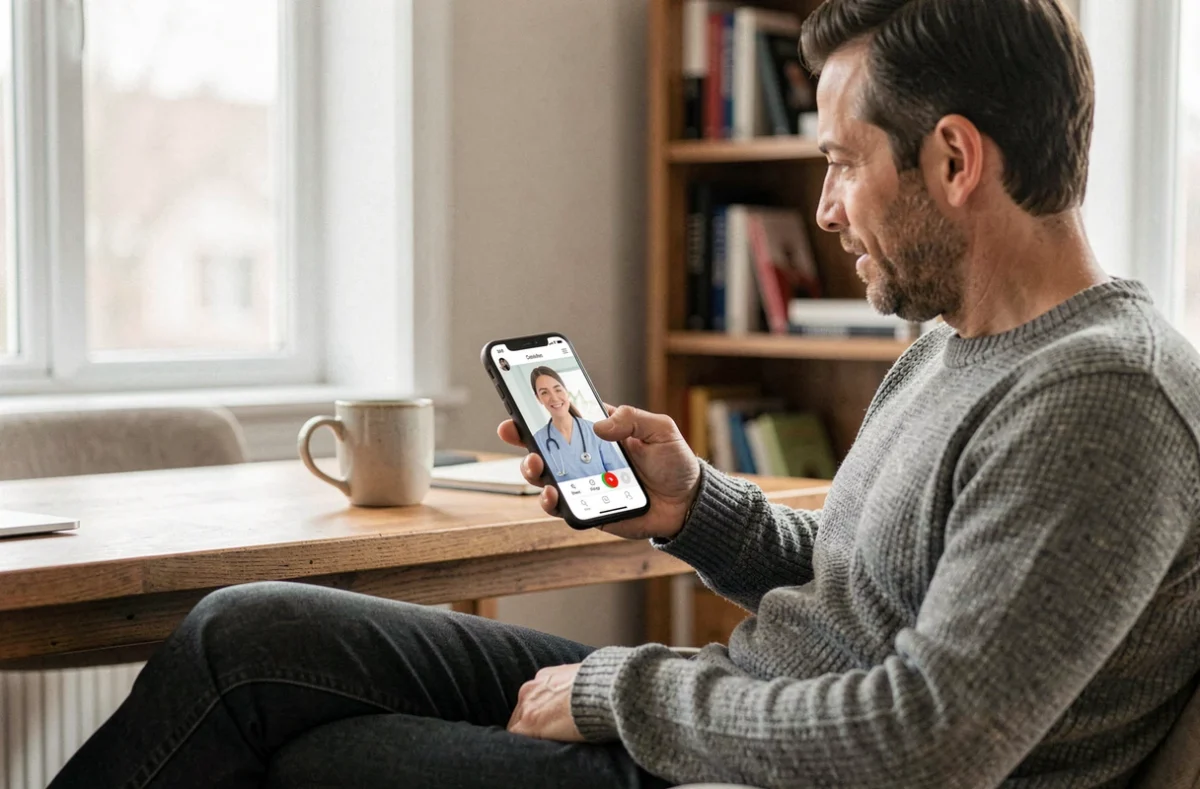
Teleconsultation lets you get medical advice without leaving home. Several platforms offer video consultations with general practitioners or specialists, reimbursed by the French Health Insurance system under certain conditions (following the coordinated care pathway and consulting a doctor known to the patient or based nearby).
Teleconsultation is not a substitute for a physical examination. It is suitable for follow-up questions, treatment adjustments or referrals, but not for a diagnosis that requires palpation, auscultation or further tests.
Access to specialists: the coordinated care pathway and its limitations
In France, seeing a specialist normally requires a referral letter from your regular doctor. Without one, reimbursement by the French Health Insurance system is reduced. A few specialties are exceptions and can be accessed directly: ophthalmology, gynaecology, psychiatry (for patients under 26) and dental surgery.
A practical problem arises when your regular doctor is unavailable and you think you need a specialist’s opinion. There are two options.
The first is to see another general practitioner temporarily as a “replacement regular doctor”, who can write a referral to a specialist. Online appointment platforms make it easier to find one by filtering for availability and location.
The second option is to contact the 15 medical triage service or use a teleconsultation. The doctor can assess whether a specialist’s opinion is appropriate and refer you accordingly. The doctor on the 15 medical triage service can refer you directly to a specialist if your clinical situation warrants it.
Non-urgent health advice: distinguishing reliable information from medical advice
For questions about prevention, nutrition or wellbeing, the line between health advice and medical care can become blurred. Official websites (Ameli, Santé publique France, HAS) publish evidence-based recommendations. Forums and social media, by contrast, mix personal accounts, disguised advertising and outdated information.
Personalised health advice requires speaking with a trained professional who knows the patient’s medical history or asks the necessary questions to tailor their response. Generic information found online does not take into account drug interactions, individual contraindications or underlying conditions.
Here are a few ways to assess whether a health advice source is reliable:
- Does the website identify its writers or advisers and state their qualifications?
- Is the information dated and kept up to date?
- Is the advice tailored to the individual, or is it a general recommendation?
- Does the service explain its limitations (what it does not handle and when it refers people to a doctor)?
A health advice service that never mentions its limitations should be treated with caution. Any credible health professional knows when they cannot answer a question.
Ultimately, the right channel depends on the exact nature of your need: life-threatening, urgent or non-urgent. Keeping this framework in mind, especially when your regular doctor cannot be reached, helps avoid both wasted time and unnecessary visits to hospital emergency departments.