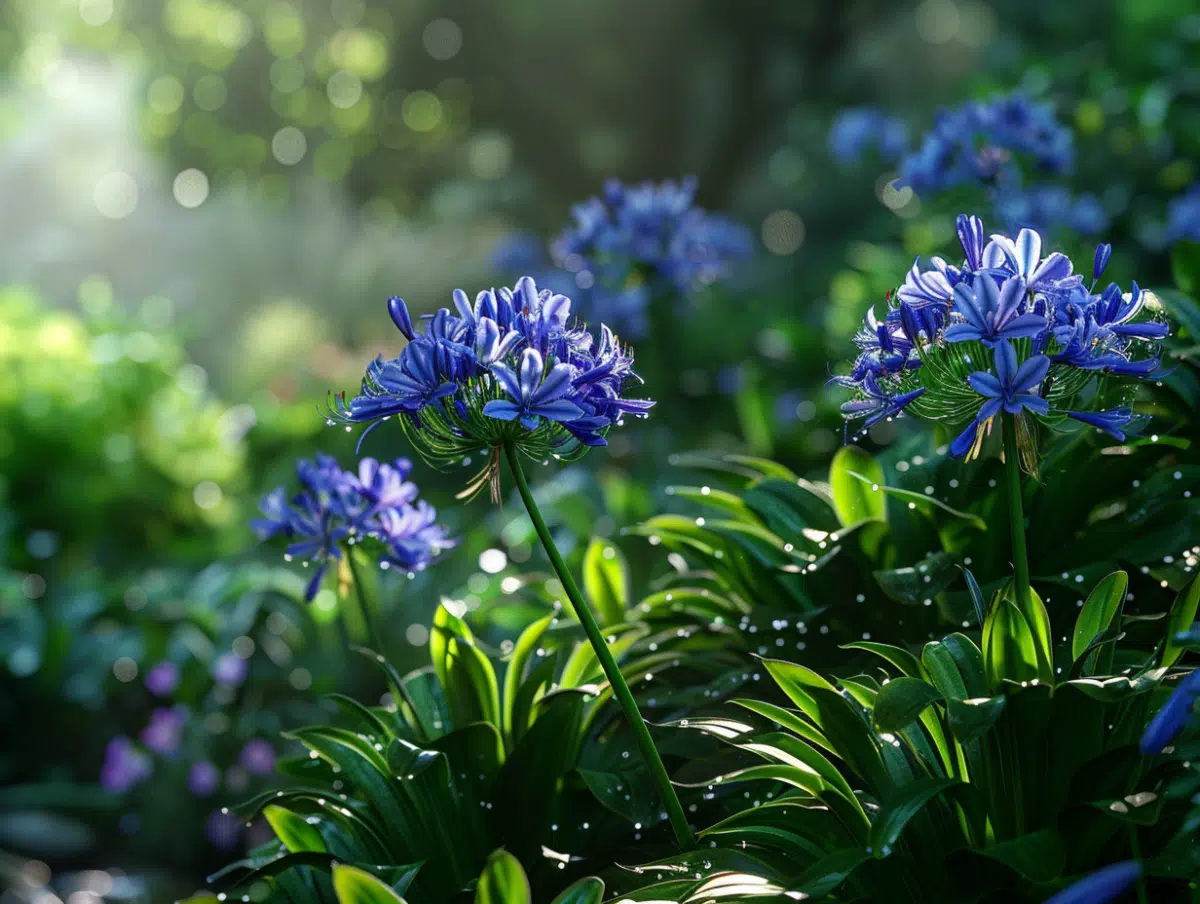
The Agapanthus, with its majestic bell-shaped flowers, is a plant that adorns many gardens and balconies. For it to reveal its full splendor, proper care is essential. This begins with understanding its needs in terms of soil, watering, and exposure. Gardeners must also master pruning techniques and protection against diseases and pests to encourage abundant flowering. Adopting the right practices is key to enjoying its clusters of blue, white, or purple flowers, which add a touch of elegance to any green space.
Preparation and planting for healthy growth of the agapanthus
Choosing the right location for your agapanthus is a crucial step. These perennials thrive in a well-drained, fertile, slightly acidic to neutral soil and require a sunny or slightly shaded location, with at least six hours of sunlight per day. Before planting, test the soil pH to ensure it meets the plant’s needs. Then enrich it with compost to improve its structure and fertility. Careful soil preparation is a guarantee of your flowering plants’ future health.
When acquiring your agapanthus, opt for quality plants, preferably purchased from a reputable nursery. Healthy, vigorous roots are the foundation of strong and vigorous growth; therefore, prepare them carefully before placing them in the planting holes. Make sure to space the plants sufficiently to allow them to grow without competition, and protect them from weeds that could hinder their growth.
As for the question that often plagues gardeners: ‘Should the leaves of agapanthus be cut?’, the answer is nuanced. During the growth phase, it is recommended to leave the leaves intact as they contribute to photosynthesis and thus to the overall health of the plant. After flowering, however, you can remove dead or damaged leaves to encourage the appearance of new ones. This also helps prevent the leaves from becoming a refuge for pests and diseases. Meticulous care of the agapanthus, starting from planting, is essential to ensure a brilliant bloom on your balcony terrace or in your garden.

Seasonal care and practices for optimal flowering of the agapanthus
Watering is a crucial component in the care of agapanthus. It should be done regularly while avoiding excess, as waterlogged soil can lead to root rot. The surface of the soil should slightly dry between waterings. During the growth period, a simple rule applies: Water once a week, slightly increasing the frequency during hot summer days, and reducing water input as autumn approaches. Be attentive to signs of water stress, both for excess and lack of water, and adjust your practice accordingly.
Fertilization is another pillar for ensuring spectacular flowering of agapanthus. Use a balanced fertilizer, rich in potash and phosphorus, to encourage blooming. In early spring, a slow-release fertilizer is recommended to support the growth of leaves and flowers. Subsequently, a liquid fertilizer can be applied monthly until the end of the flowering period. Prefer moderate but regular amounts of fertilizer to maintain an optimal level of nutrients in the soil.
Pruning and dividing the clumps are major interventions for the health and aesthetics of the plant. Remove faded flowers to stimulate the appearance of new ones, and remain vigilant for any potentially diseased leaves to eliminate. Every three to four years, it is recommended to divide the clumps to promote growth and avoid overcrowding, which could harm flowering. This division should take place after flowering, usually in autumn, to prepare the plant for the next season.