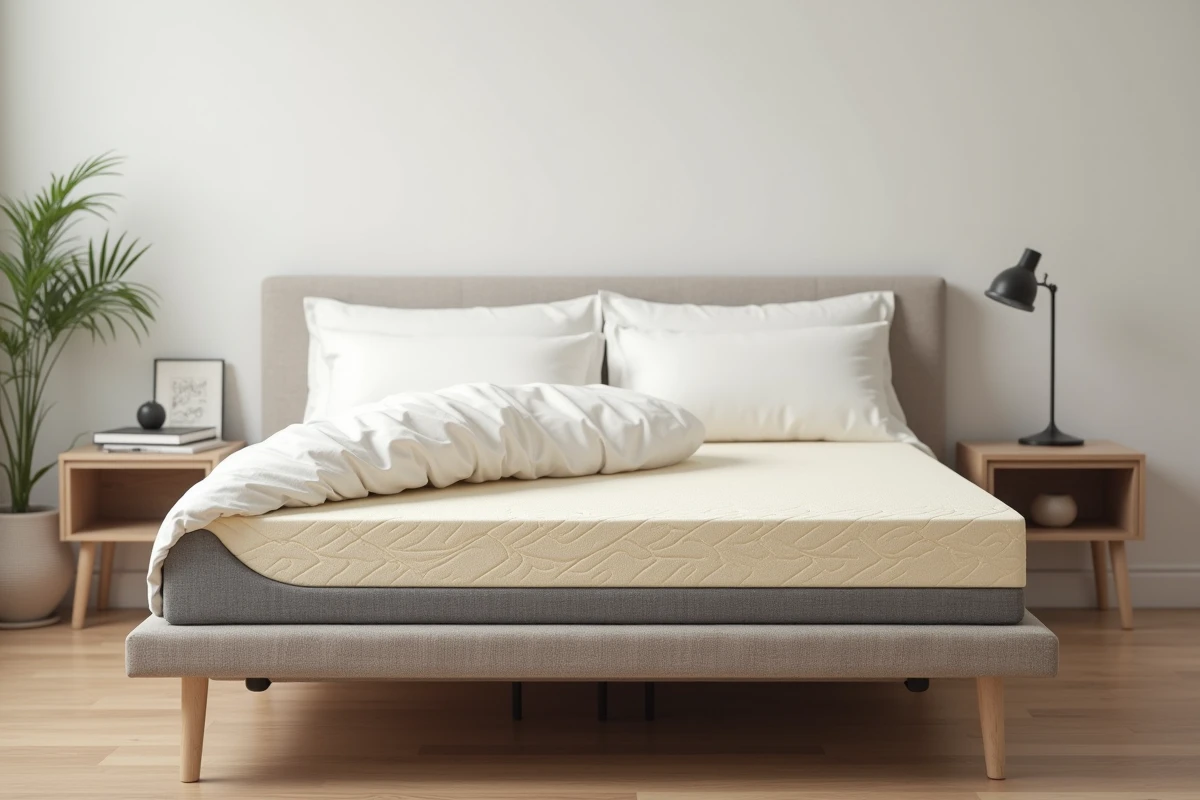
A mattress placed on a relaxation bed frame undergoes mechanical constraints that are absent in a fixed frame. Repeated flexing at the lumbar region, bending at the knees, returning to flat several times a night: the filling must withstand these deformations without losing its supportive properties. Latex, with its honeycomb structure, meets these requirements better than most conventional foams.
It remains to measure what this material brings concretely compared to other sleeping technologies compatible with an electric bed.
Latex, foam, and memory foam on electric beds: comparison table
Three mattress technologies are regularly associated with relaxation bed frames. Their behaviors differ on several key criteria for comfort and durability.
| Criterion | Natural Latex | Polyurethane Foam | Memory Foam |
|---|---|---|---|
| Flexibility during torso lifts | Very good (immediate elasticity) | Fair | Average (slower response) |
| Shape recovery after bending | Almost instantaneous | Progressive | Slow (sensitive to heat) |
| Thermal regulation | Good (ventilated honeycomb structure) | Variable depending on density | Poor (retains heat) |
| Estimated lifespan | Long | Average | Average to long |
| Hypoallergenic properties | Yes (natural resistance to dust mites) | No | No |
| Weight of the mattress | High | Light | Medium |
Natural latex stands out for its ability to immediately regain its original shape after each movement of the bed frame. This is a direct advantage for users who frequently change positions during the night. To delve deeper into this topic, the gamma mattresses on La Santé de Demain detail the technical characteristics suited for relaxation beds.
On the other hand, memory foam reacts to body temperature with a slight delay. On an electric bed frame, this response time creates a mismatch between the position of the frame and that of the mattress, a potential source of discomfort.
Comfort zones and morphological support on relaxation bed frames
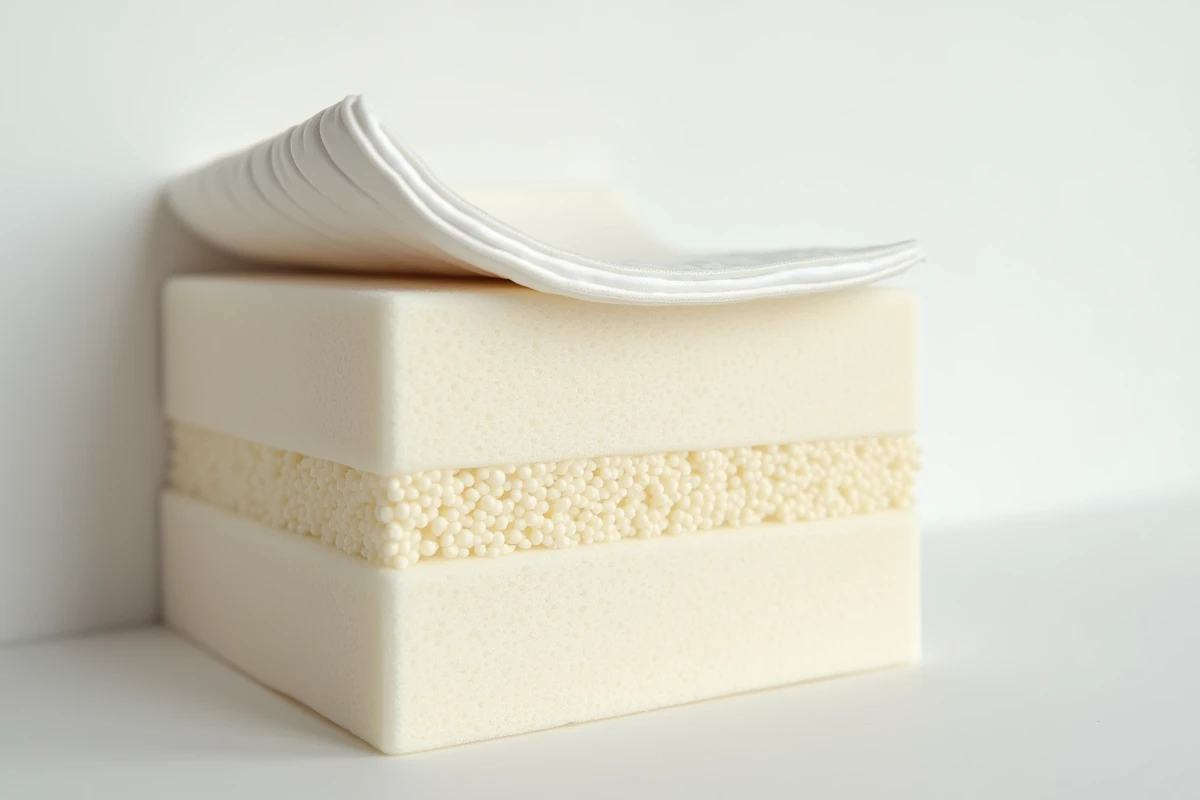
A latex mattress for electric beds generally incorporates several differentiated firmness zones. Some models offer five distinct zones, designed to adapt support to the shoulders, lumbar area, and pelvis.
This segmentation takes on particular significance on an articulated bed frame. When the torso is lifted, the back zone of the mattress undergoes asymmetric compression. Latex absorbs this constraint without creating a hard point, whereas conventional foam tends to form a rigid fold at the hinge.
Firmness and density of latex: the right adjustment
The density of latex directly influences the firmness of the sleeping surface. Latex that is too soft will not maintain spinal alignment in a semi-sitting position. Conversely, latex that is too firm will make bending the mattress difficult for the bed frame’s motor.
- For a light body type (under 60 kg), medium-density latex offers a good compromise between flexibility and support.
- Average-weight sleepers find a balance with intermediate to firm density, which better withstands repeated flexing.
- Above 90 kg, high-density latex limits sagging in the bending areas of the bed frame and extends the mattress’s lifespan.
The choice of density also impacts ventilation. The denser the latex, the tighter the cells, which slightly reduces air circulation. This is a compromise to consider for those who sweat at night.
Certifications of natural latex: what distinguishes a reliable mattress
The term “natural latex” does not alone guarantee product quality. Regulations require that the latex core measures at least 10 cm thick and that latex constitutes at least 60% of the total height of the mattress to be labeled as “latex mattress.”
Beyond this regulatory base, several French brands highlight specific environmental and health certifications. The GOLS (Global Organic Latex Standard) certification confirms that the latex comes from rubber tree plantations managed according to organic criteria. This certification covers the entire production chain, from the harvesting of raw latex to the manufacturing of the mattress.
Natural or synthetic latex: a real performance gap
Synthetic latex, derived from petroleum, partially replicates the elasticity of natural latex. However, its resilience is lower over the long term, resulting in faster sagging in the bending areas on an articulated bed frame.
Natural latex retains its elastic properties longer than synthetic latex subjected to the same mechanical constraints. For an electric bed used daily, this difference in longevity justifies the price disparity.
Allergens and thermal regulation: two underestimated criteria
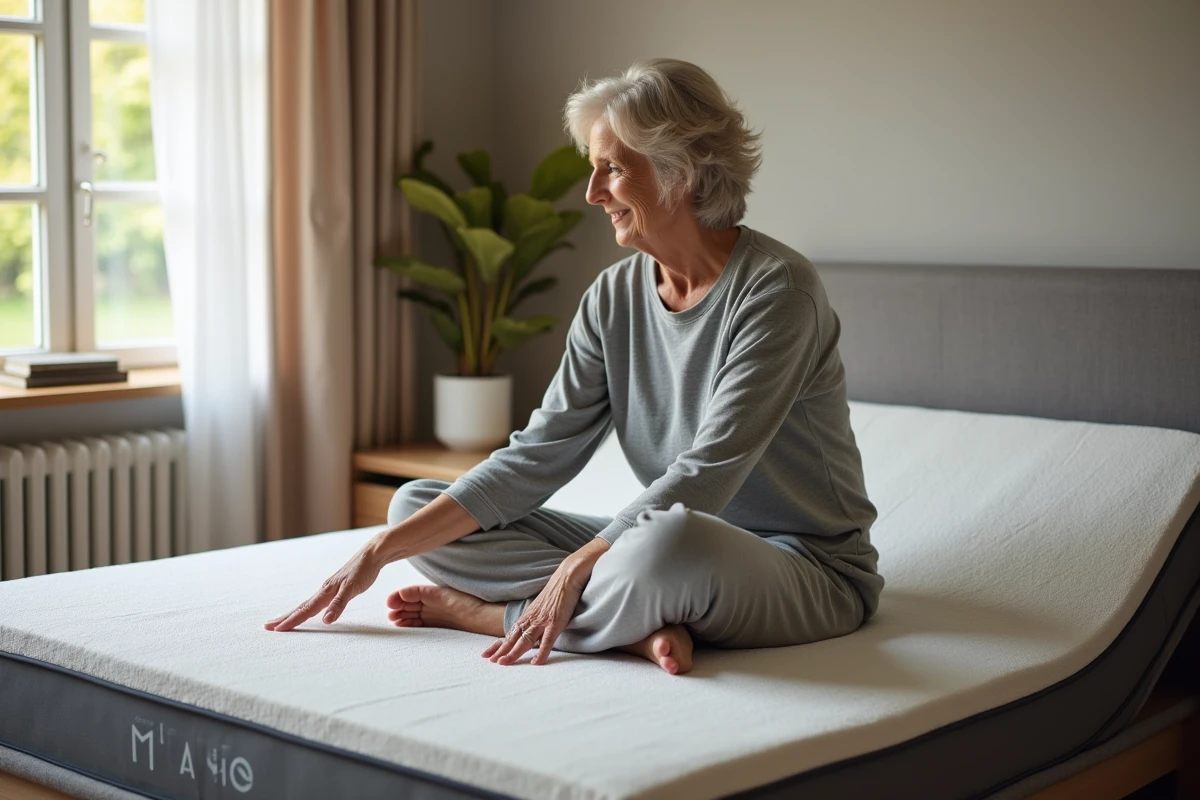
Prolonged use of an electric bed in a semi-sitting position (reading, screen time, recovery) increases the duration of contact between the body and the mattress. This increased exposure amplifies two issues often overlooked during purchase.
Natural latex has an intrinsic resistance to dust mites and mold. Its honeycomb structure creates an unfavorable environment for their development. For individuals suffering from respiratory allergies, this is a more significant criterion for a relaxation bed than for a fixed bed, given the time spent in an elevated position.
Thermally, the cells of latex promote air circulation through the mattress. In a sitting position, the contact surface with the back increases compared to lying down. Good ventilation of the mattress limits heat accumulation in the back area, a point that memory foam manages less effectively.
- Natural latex expels moisture more quickly than synthetic foams due to its open structure.
- Models with additional perforations further enhance this ventilation, an asset for summer nights.
- The mattress cover also plays a role: opting for a breathable fabric made of natural fibers complements the regulation system.
The weight of the latex mattress remains its main practical disadvantage. Changing sheets or flipping the mattress requires more effort than with a foam model. On an electric bed frame, this extra weight does not affect the motor’s operation, but it complicates daily handling.
This detail deserves to be anticipated before purchase, especially for individuals with reduced mobility using a relaxation bed.